
Article summary. Audience: Food Brands & Packaging Buyers. Topic: Custom Packaging Cost Small Food Brand 2026 Real Numbers. Key takeaway: Transparent cost breakdown for custom food packaging across three stages — stock+labels ($150-600), digital printing .... Sources: ZentPak Manufacturing Data, FDA 21 CFR, ASTM Standards.
At a glance · Summarize with
The first time I helped a small food brand price out custom packaging, the founder had budgeted $500. Her actual first order came in at $1,850. She was $1,350 over budget —and that was a good outcome. Most founders in her position go 2-3x over budget, or get rejected by suppliers entirely, or both.
A small food brand's first custom packaging order costs between $150 and $10,300+, depending on the stage you're in. Stock packaging with custom labels runs $150-600. Digital-printed custom bags run $1,350-3,150 for a first order of 500-1,000 units. Full flexo/gravure custom packaging runs $4,300-10,300+ for an initial run of 5,000-10,000 units. The difference between these numbers isn't just volume —it's a fundamentally different production technology, cost structure, and risk profile.
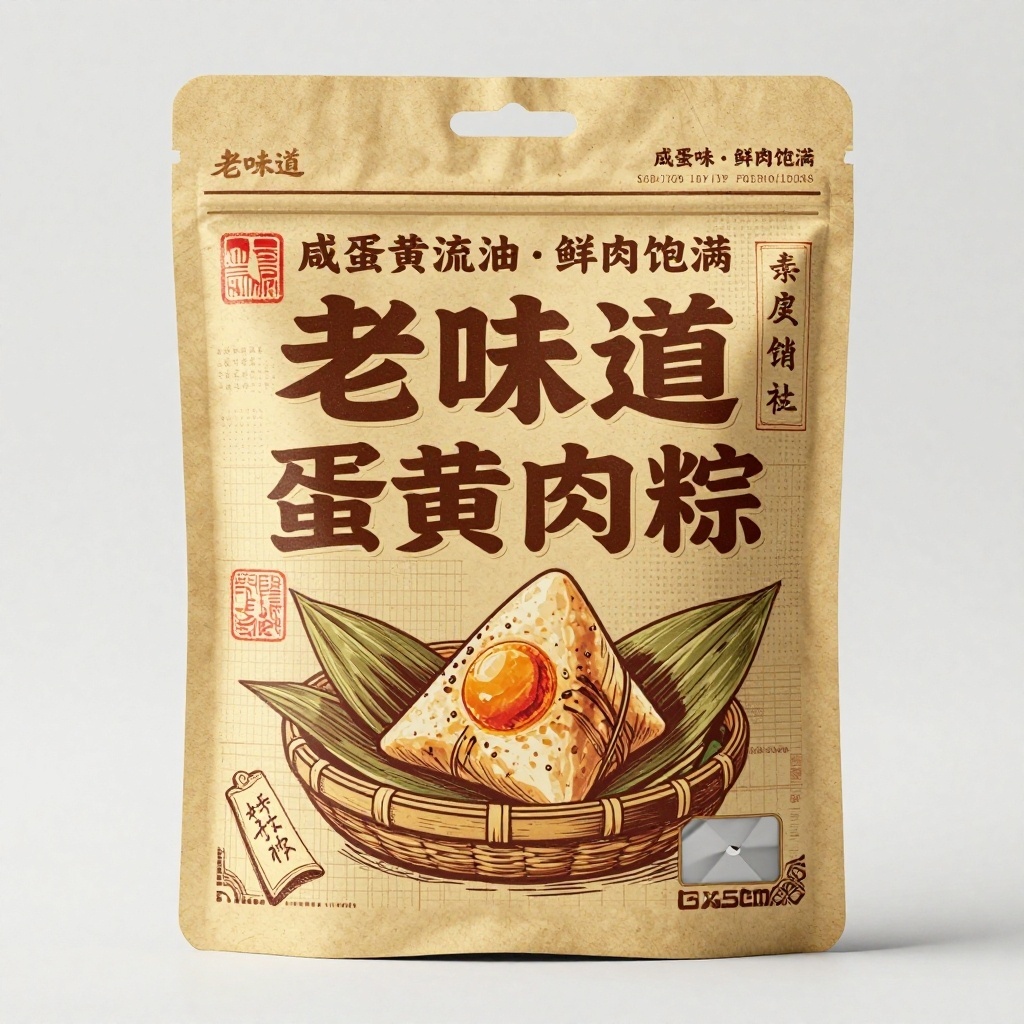
I'm going to break this down into seven sections: the hidden fees that eat your budget, what you can actually do at each of the three stages, a full cost comparison table, the inventory trap, and what real brands actually paid.
The 30-50% Budget Eater Nobody Warned You About
Before I show you what things cost, I need to show you why most first-time buyers get blindsided. Because the number you see online —"$0.30 per bag" —is not the number on your invoice.
In traditional flexo printing, your first order carries four one-time costs that don't appear in per-unit pricing:
Plate fees: $70-400 per color. Each color in your design requires a physical photopolymer printing plate. A typical small brand design has 4-8 colors. At an average of $250 per plate, a 6-color design costs $1,500 in plates alone. These plates are yours forever —reorders don't pay this again —but the first invoice doesn't care.
Die-cutting tooling: $150-500+. Your bag or box shape needs a custom steel rule die —essentially a giant industrial cookie cutter. Standard pouch sizes sometimes have existing dies, but custom dimensions always mean custom tooling.
Physical samples: $300-600. Before a flexo press runs your full order, the operator mounts your plates, loads the substrate, calibrates registration, and prints test samples. That setup run consumes 300-800 meters of material. You pay for the material, the press time, and the operator's time —even if only 10 bags come out of it.
Prepress and file prep: $200-500. Your design file —whether from a freelancer, a Canva template, or your cousin who "knows Illustrator" —needs to be converted to print-ready format. Bleeds, trapping, color separations, and plate-ready files. This is skilled labor and it's billed accordingly.
Add them up: $1,500 (plates) + $400 (die) + $500 (samples) + $350 (prepress) = $2,750. On a first order of 1,000 bags, that's $2.75 per bag before you've paid for a single bag. The bags themselves might cost $0.60-0.80 each. So your real per-unit cost on the first order isn't $0.60 —it's $3.35-3.55.
This is the fundamental reason small orders are expensive: the setup cost is nearly fixed, regardless of whether you order 1,000 or 100,000 units.
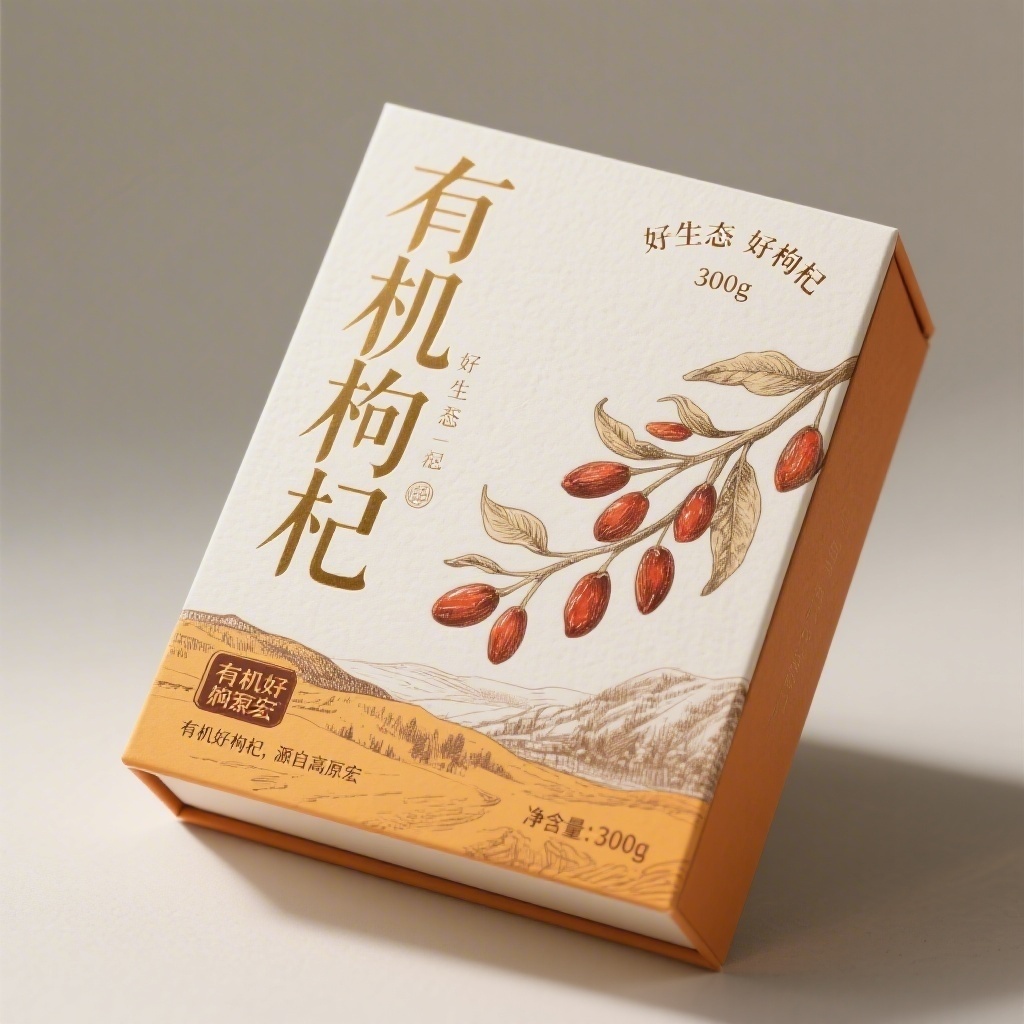
Stage 1 — Stock Packaging + Labels ($150-600)
This is where almost every brand starts. You buy ready-made bags or boxes from a packaging supplier, then apply your own labels. The bags cost $0.10-0.40 each in small quantities. Custom-printed labels cost $0.15-0.50 each. For 500 units: $125-450.
What you get: your brand on a shelf in under 2 weeks, for under $600. No MOQ. No tooling. No waiting.
What you don't get: a fully branded package. The bag itself is generic —kraft brown, clear, or white. Your label is the only custom element. On a retail shelf next to a fully printed competitor, the difference is visible.
This stage makes sense when you're testing a product at farmers markets, doing small-batch direct-to-consumer, or proving the concept before committing real money to packaging. It also makes sense when your volume is so low —under 100 units a month —that the hand-labeling labor isn't yet a meaningful cost.
The upgrade trigger: when you're spending more time applying labels than you are making product, or when a retail buyer says "we love the product but the packaging needs work." At that point, the labor cost of hand-labeling ($15-25/hour × 30-60 seconds per bag) starts competing with the premium for digital printing.
Here's the math: 500 bags × 45 seconds each = 6.25 hours of labeling. At $20/hour, that's $125 in labor. Add $250 for the bags and labels themselves. You're at $375 —and the result still looks like a stock bag with a sticker. For $1,000 more, digital printing gives you a fully custom bag with zero labor.
Stage 2 — Digital Printing Custom ($1,350-3,150)
This is the stage where everything changes for small brands. Digital printing —using industrial inkjet or electrophotographic presses like the HP Indigo 25K/200K or Fujifilm FP790 —prints directly from a digital file onto flexible packaging materials. No plates. No minimum run. No setup waste.
A realistic first order at this stage:
| Item | Cost | Notes |
|---|---|---|
| Design (freelancer) | $300-800 | One-time, if you don't have print-ready files |
| Prepress/file prep | $100-250 | Less than flexo because no color separations needed |
| Custom bags (1,000 units) | $600-1,500 | $0.60-1.50/bag depending on size, material, features |
| Digital proofs | $0-100 | Often free for digital; some charge for rush |
| Shipping | $100-250 | Ground, 3-5 business days |
| Total | $1,350-3,150 | $1.35-3.15 per bag, all-in |
The range is wide because your bag's specs drive the unit cost. A simple flat-bottom pouch with a zipper and tear notch —the most common coffee/snack bag —runs $0.60-0.90 in digital quantities. Add matte finish, add a clear window, add a degassing valve, go up in size —and you're at $1.20-1.50. All still reasonable, but the differences add up fast across 1,000 units.
What makes Stage 2 revolutionary isn't just the cost. It's the flexibility. Because there are no plates, you can change your design between orders at zero cost. You can run 3 SKUs in the same batch. You can order 500 bags of a new flavor to test, then 2,000 of the winner, all without tooling penalties.
The tradeoff: at higher volumes, digital printing's per-unit cost stops dropping. Where flexo hits $0.30/bag at 10,000 units, digital might only get to $1.20. The crossover point —where flexo's lower per-unit cost outweighs its higher setup cost —is typically 3,000-5,000 units per SKU. Below that, digital is cheaper in total. Above that, flexo takes over.
Stage 3 — Flexo/Gravure Full Custom ($4,300-10,300+)
This is where the big brands play. And it's where you want to be —eventually.
A realistic first flexo order for 10,000 stand-up pouches:
| Item | Cost | Notes |
|---|---|---|
| Design + prepress | $500-1,500 | More complex than digital prep |
| Plates (6-color) | $900-2,400 | $150-400/color × 6 |
| Die-cutting tooling | $300-600 | Custom shape |
| Physical samples | $400-800 | Press proofs, 2-3 rounds |
| Custom bags (10,000 units) | $1,500-3,000 | $0.15-0.30/bag |
| Shipping | $300-700 | Freight for 10,000 units |
| Total | $4,300-10,300 | $0.43-1.03 per bag, all-in |
The per-unit cost looks great. $0.43-1.03 per bag, including the setup amortized across 10,000 units. On reorders —no plates, no die, no samples —it drops further to $0.18-0.37 per bag. At 50,000 units, you're at $0.10-0.25. This is where packaging becomes cheap enough that it's a rounding error in your COGS.
But the total cash outlay is real. $4,300-10,300 is real money for a small brand. And the inventory commitment is even realer. 10,000 bags is a lot of bags. If you sell 800 units a month, that's a 12.5-month supply. If you change your recipe, redesign your brand, or discontinue a flavor in month 6 —half those bags are waste.
The decision to go flexo isn't just "can I afford the invoice." It's "am I confident this SKU will sell at least 10,000 units in the next 12 months without design changes." If the answer is anything less than an enthusiastic yes, stay at Stage 2.
Technical Comparison Matrix: Digital vs Flexo vs Stock
| Cost Dimension | Stock + Labels | Digital Printing | Flexo/Gravure |
|---|---|---|---|
| First-order MOQ | 0 (buy any quantity) | 50-1,000 | 5,000-10,000+ |
| Plate/setup fees | $0 | $0 | $70-400 per color |
| Die-cutting tooling | $0 (stock shapes) | $0-150 (standard) or $150-500 (custom) | $150-500+ |
| Per-unit cost (500 units) | $0.50-1.00 (bag+label) | $2.70-6.30 | Not available |
| Per-unit cost (1,000 units) | $0.40-0.80 | $1.80-4.00 | $3.10-8.00 (setup-heavy) |
| Per-unit cost (5,000 units) | $0.30-0.60 | $1.50-3.00 | $0.60-1.60 |
| Per-unit cost (50,000 units) | — | $1.00-2.00 | $0.15-0.50 |
| Design flexibility | None (bag is generic) | Maximum (change every order) | Low (plate changes = cost) |
| Multi-SKU in one batch | N/A | Yes, no extra cost | No, each SKU needs own plates |
| Turnaround time | Immediate + 1-2 weeks labels | 48 hours to 3 weeks | 6-12 weeks |
| Total cost (first 1,000 units) | $500-1,000 | $1,350-3,150 | $3,100-8,000 |
| Total cost (first 5,000 units) | $2,000-3,500 | $7,500-15,000 | $4,300-10,300 |
| Brand perception | "Homemade" | "Professional small brand" | "Established brand" |
| Best for | Testing, farmers markets, <200 units/month | Growing brands, multi-SKU, 200-3,000 units/month/SKU | Scaled brands, 3,000+ units/month/SKU |
The Hidden Cost of "Cheap" — Inventory, Obsolescence, and Cash Flow
A $0.30 flexo bag looks like a bargain compared to a $0.90 digital bag. But unit cost is the wrong metric for a small brand. Let me show you why with a real scenario.
You need 2,000 coffee bags for the next 6 months. You have 3 blends, so that's about 670 bags each. A flexo supplier quotes you 10,000 bags at $0.30 each —$3,000 total. "Great price per bag," you think. A digital printer quotes you 2,000 bags at $0.90 each —$1,800 total. "Expensive per bag," you think. You go with flexo.
Six months later, you've used 2,000 bags. You have 8,000 left. But you just updated your logo —a small change, but it matters. And one of your blends is being reformulated with a new name. Those 8,000 bags are now a problem. You can use them with the old branding (confusing to customers), discard them ($2,400 of bags in a landfill), or sticker over the old logo (defeating the purpose of custom printing).
What was the real cost of the bags you actually used? $3,000 ÷ 2,000 bags used = $1.50 per bag —67% more than the digital quote. And you still have 8,000 obsolete bags taking up space.
This isn't a rare edge case. Small brands change their packaging constantly in the first 2-3 years —new flavors, reformulations, branding updates, regulatory changes, seasonal designs. The probability of any given SKU's packaging being unchanged in 12 months is low. Flexo locks you into a design. Digital lets you iterate.
The real comparison isn't $0.30 vs $0.90 per unit. It's total cash out the door vs total usable units. On that math, digital wins for almost every small brand's first 12-24 months.
What 10 Small Food Brands Actually Paid (Real Numbers)
These are anonymized but real cost ranges, based on the brands I've worked with and the research I've done across the industry.
Coffee Roaster —3 Single-Origin Blends, 500 bags each
- Stage 2, digital printing, stand-up pouches with zipper and valve
- Design: $500 (freelancer, 3 variants from one template)
- 1,500 bags: $1,200 ($0.80/bag, ganged in one print run)
- Shipping: $100
- Total: $1,800 —$1.20/bag all-in
Craft Kombucha —4 Flavors, 500 labels each
- Stage 2, digital labels for stock bottles
- Design: $400 (one template, 4 flavor variants)
- 2,000 labels: $1,200 ($0.60/label)
- Shipping: $75
- Total: $1,675 —$0.84/bottle all-in
- Note: She originally budgeted $2,000 and got rejected by 5 traditional printers before finding digital
Pet Food Startup —6 Proteins × 300 Sample Bags
- Stage 2, digital printing, small flat-bottom pouches
- Design: $600 (6 variants from a master template)
- 1,800 bags: $1,620 ($0.90/bag, small quantity, custom size)
- Shipping: $120
- Total: $2,340 —$1.30/bag all-in
- Note: Flexo quotes required 30,000 bag minimum. Digital let him test all 6 proteins before committing
Craft Brewery — Core IPA Cans, 50,000 units
- Stage 3, flexo-printed aluminum cans
- Plates (4-color): $800
- 50,000 cans: $4,000 ($0.08/can)
- Total: $4,800 —$0.096/can all-in
- Note: At this volume, flexo is the only rational choice. But he keeps seasonal beers on digital labels
These aren't hypotheticals. They're the range you should expect. The single biggest variable is whether you use digital or flexo printing —and that decision should be driven by your volume per SKU, not by what a supplier recommends.
FAQ: Common Questions About Packaging Costs
Q: What's the absolute minimum I can order?
50-100 units through a digital printer. Some suppliers like noissue go as low as 25 units for certain products. But at those quantities, shipping becomes proportionally expensive, and your per-unit cost will be at the high end of the range. The practical minimum for reasonable unit economics is about 500 units.
Q: Why is my first order so much more expensive than the per-unit price I see online?
Because per-unit prices online usually quote the bag cost only —not plates, dies, samples, prepress, or shipping. On a first order, these one-time costs are 30-50% of your total invoice. Your second order of the same design will be much closer to the per-unit price you originally expected.
Q: Should I just go to Alibaba for cheaper packaging?
For orders over $10,000, yes — China sourcing becomes worth the complexity. For first orders under $3,000, the shipping, customs, samples, communication friction, and quality risk usually erase the unit price advantage. Plus, if something's wrong with your order, your recourse with a domestic supplier is infinitely better.
Q: Is digital printing quality as good as traditional?
For bags, labels, and folding cartons in the food space —yes. Color consistency on modern HP Indigo and Fujifilm presses achieves Delta E under 2.0, which is below the threshold the human eye can distinguish. The remaining gap: very large solid color areas (flexo is smoother) and metallic inks (digital can't do true metallic yet, though some presses simulate it well).
Case Study: Maya's Kombucha
The Challenge: Maya's craft kombucha moved from farmers markets to a regional Whole Foods deal. She needed 2,000 labels across 4 flavors, delivered in 6 weeks. Her packaging budget was $2,000 total.
The Failed Search: She contacted 5 traditional label printers. Three said her order was too small. Two quoted $3,500-5,000 with 6-8 week lead times —the plates alone were $900-1,400. She spent 3 weeks getting rejected and went $1,500-3,000 over budget on every viable quote.
The Solution: A digital label printer quoted $2,200 for 2,000 labels (500 per flavor, ganged in one run), zero plate fees, 10-day turnaround. The total came in $200 over budget —close enough that she could make it work.
The Results: Labels arrived on time. Whole Foods shelf placement secured. On her reorder 3 months later, the same 2,000 labels cost $1,800 —the first run included a learning-curve premium. She's now at 5,000 labels per order and the unit cost is $0.45/label. She's evaluating whether to move her best-selling flavor to flexo.
Conclusion
Custom packaging costs more than you expect on the first order, and less than you fear once you understand where the money goes. If you're a small brand, start with digital printing. It eliminates the biggest cost driver. Get your design right, prove your volumes, then graduate to flexo when the math actually works —not before.
Next step: Get quotes from 3 digital printers for your best-selling SKU only. Ask for line-item breakdowns. Compare total cash out the door, not per-unit cost at volumes you won't reach for 18 months. You can be in custom packaging for under $2,000 —you just need to ask the right people the right questions.
Next Step
Get Your Free Quote in 24 Hours — include pouch size, material, quantity, and target launch date.
Get Your Free Sample Kit — test seal strength, print color, and shelf-life fit before you scale.
Frequently Asked Questions About Custom Packaging Cost Small Food Brand 2026 Real Numbers
Expert Consultation
Not Sure Which Packaging Is Right?
Our packaging engineers review your product specs and recommend the optimal material, size, and barrier combination. Free 20-minute consultation.


